Theoretical Physics · Open Quantum Systems

Tommy Chin

PhD Candidate in Physics

Institute for Gravitation & the Cosmos, The Pennsylvania State University

I build theoretical frameworks that infer global properties of an open quantum system from ensembles of local subsystem descriptions.

Tommy Chin

Research

I work with Prof. Sarah Shandera in the Institute for Gravitation and the Cosmos on the theory of open quantum systems. I study how excitation, correlation, and information move through quantum networks whose subsystems couple to environments no measurement can reach.

I expect to defend in May 2028 and am applying for postdoctoral positions in open quantum systems and related areas of theoretical physics, beginning Fall 2028.

Publications

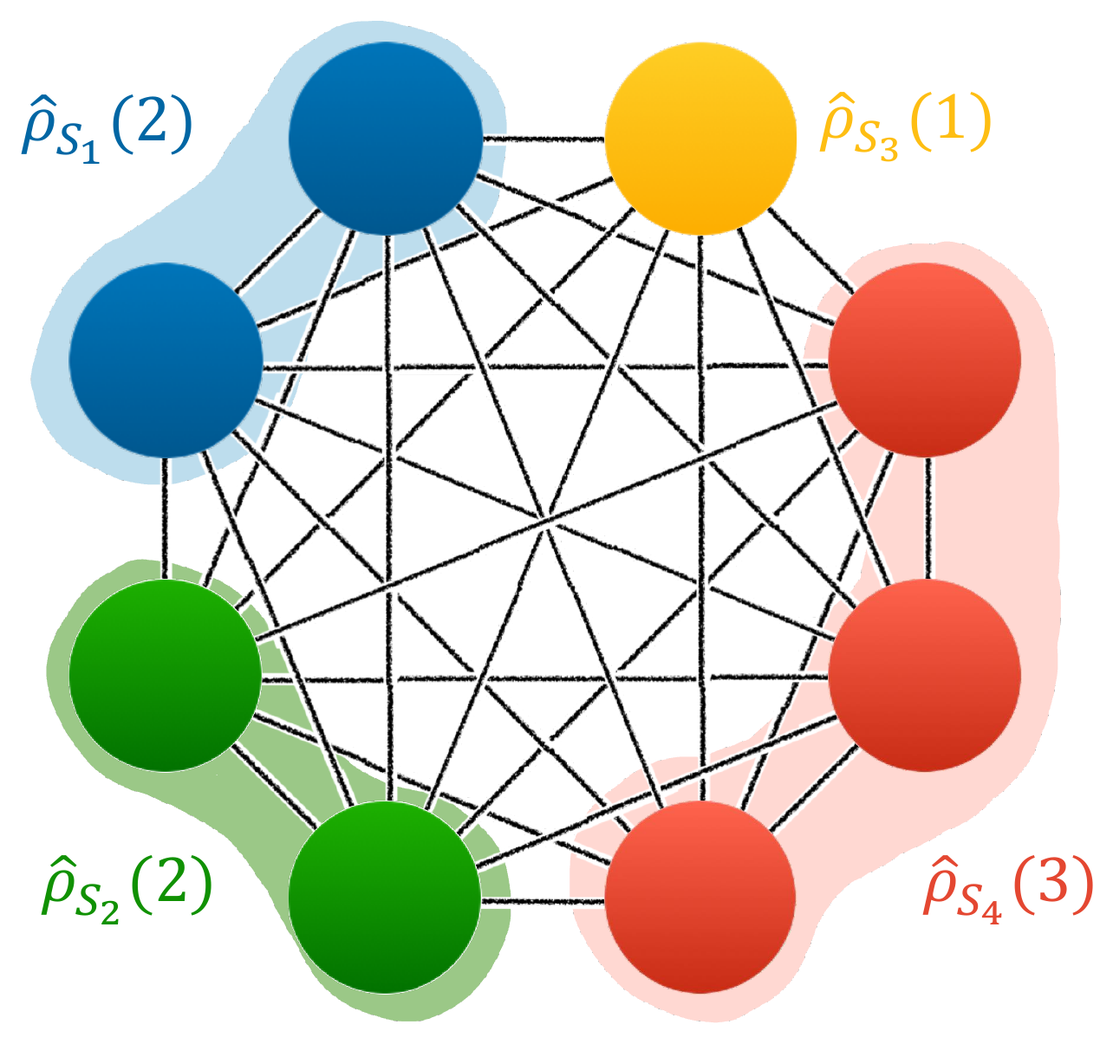
A fully connected N-qubit network partitioned into four open subsystems, each described by a reduced density matrix.

2026 · Preprint

Excitation Flow, Positivity, and Fisher Information for Open Subsystems of an N-Qubit Network

T. Chin, S. Shandera

arXiv:2605.15036 [quant-ph] (2026) · Under review at Physical Review A

I study the reduced dynamics of K-qubit subsystems of larger qubit networks, where the direction of excitation flow determines whether the propagator remains positive and completely positive. Quantum Fisher information sets what local measurements recover about the global network.

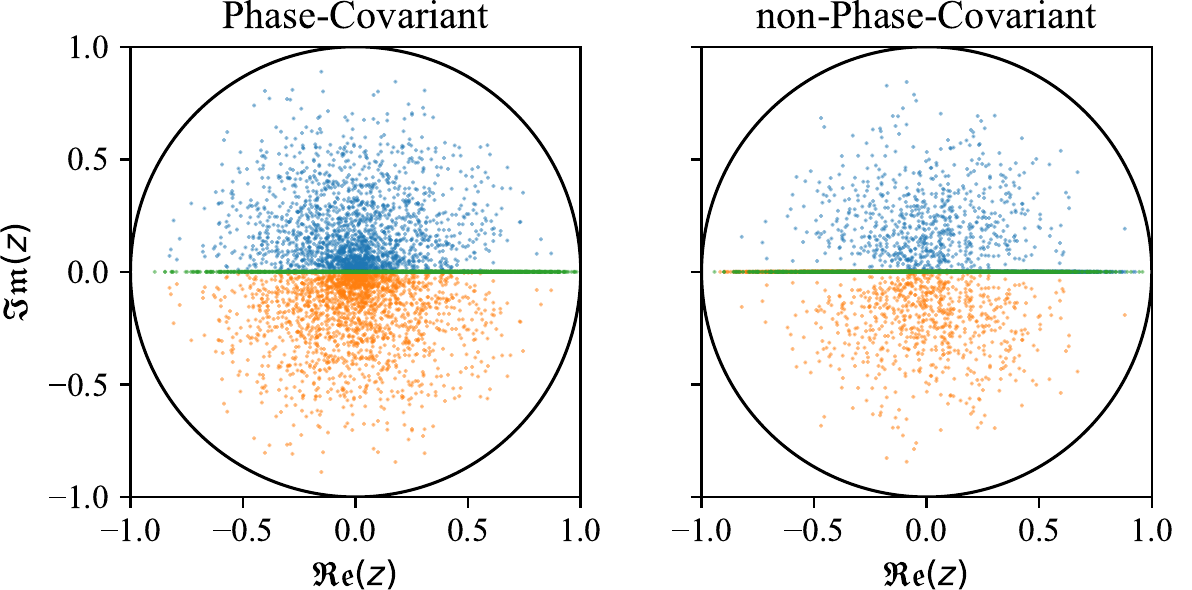
Eigenvalue distribution in the unit disk for a non-phase-covariant qubit ensemble.

2024 · Peer-reviewed

Effective Dynamics of Qubit Networks via Phase-Covariant Quantum Ensembles

S. Prudhoe, U. Akhouri, T. Chin, S. Shandera

Open Systems & Information Dynamics 31, 2450016 (2024)

Effective subsystem dynamics often require an ensemble of propagators rather than a single generator. I work on which ensembles admit closed-form treatment and where departures from phase covariance mark the limits of that description.

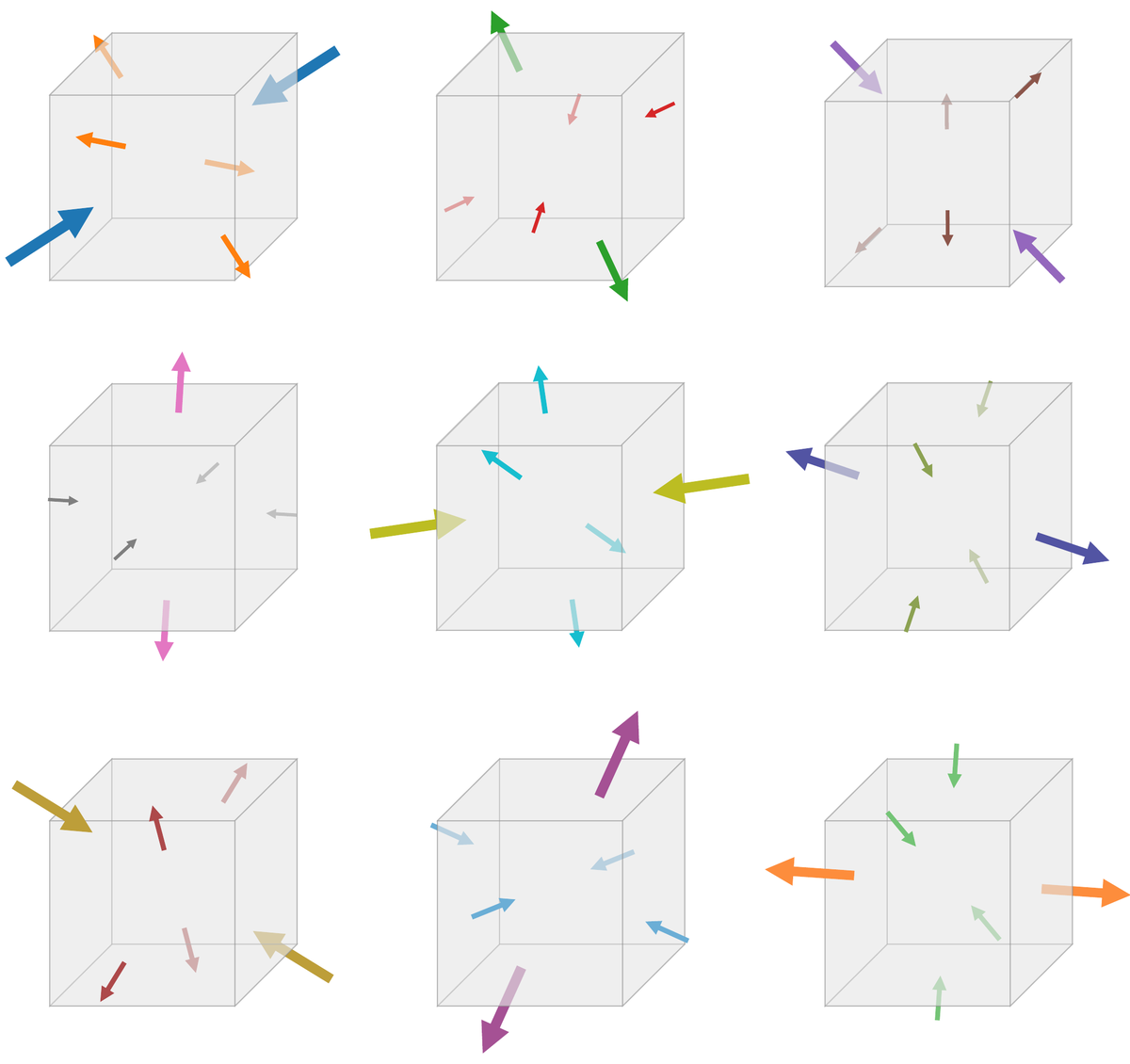
A 3 by 3 array of cubes showing strain and dark-state orientation configurations for silicon-vacancy centers.

In preparation

Impact of Strain and Dark States on Spectroscopic Measurements of Silicon-Vacancy Centers in Diamond

T. Chin, K. Narayan, I. Bashir, K. M. Bates, L. G. Stanton, E. Khatami, C. L. Smallwood

Manuscript in preparation

I built the Monte Carlo and GPU simulations relating strain distributions and dark-state structure in silicon-vacancy centers to measured photoluminescence spectra, in collaboration with an experimental group.

Selected Talks

A full list of talks and posters, including the “Entropy Whisperer” poster award (University of Rochester, 2026), is in the CV.

Honors & Awards

Teaching

Contact

Email: wjc5509@psu.edu

Office: 104 Davey Lab, Box 189, University Park, PA 16802

Institute for Gravitation & the Cosmos, Department of Physics, The Pennsylvania State University

CV  ·  Google Scholar  ·  arXiv  ·  ORCID  ·  INSPIRE  ·  LinkedIn